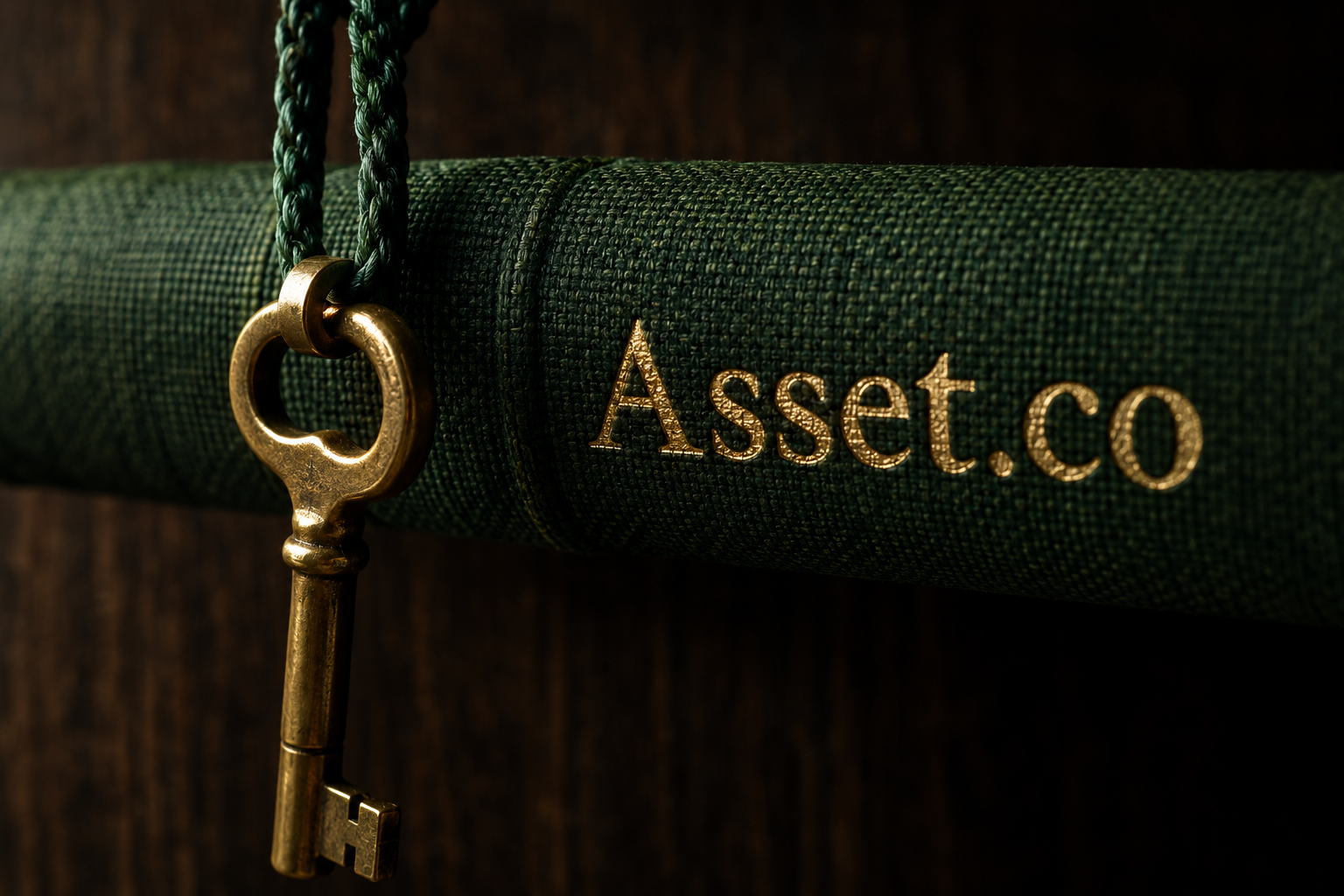
I imagine an alternative-asset house that begins with records, provenance, and specialist coordination rather than with a marketplace. Many valuable holdings sit outside public accounts: art, equipment, collectible objects, private interests, and contractual rights. Owners often know why they acquired them but lack a single, current record of condition, location, insurance, valuation evidence, and transfer restrictions.
Asset.co could provide that private record and bring the right specialist into the right decision. Market data firms such as Preqin cover institutional alternatives at scale. This concept would concentrate on the operating details of specific holdings, especially where the evidence is fragmented and the owner needs careful coordination.
Begin with provenance
Every item or interest would receive a file that answers basic questions. What exactly is owned? Which entity or person owns it? When and how was it acquired? Which documents support title and authenticity? Where is it located? Who has inspected or valued it? What restrictions affect a sale, loan, transport, or transfer?
I would make source quality visible. An invoice, executed agreement, specialist opinion, insurance schedule, and informal owner note are not equivalent. The system should label each one accurately. Conflicting facts should remain visible until resolved. An elegant interface is useful only if it preserves the rough edges that require judgment.
Private-company interests require a different record from physical objects. Platforms and research providers such as PitchBook organize market information, but the owner’s file also needs subscription documents, capital notices, tax records, rights, contacts, and liquidity constraints. Asset.co would connect those materials to a plain summary without presenting an estimate as a guaranteed exit value.
A house of specialists
The word house suggests an organized network rather than a single person claiming universal expertise. Art conservators, appraisers, attorneys, insurers, logistics firms, tax professionals, and market specialists each have defined roles. Asset.co would keep the record and coordinate the handoff. It would document who advised on what, when, and from which evidence.
Art makes the model tangible. Art Basel reflects the global network around galleries, artists, collectors, and fairs. The private operating work remains very specific: condition reports, installation details, loan agreements, storage locations, insurance values, and provenance documents. A useful record lowers the chance that crucial context disappears when staff, advisers, or generations change.
I would not begin by promising liquidity. Alternative assets can be difficult to price and costly to sell. Fees, timing, buyer depth, legal restrictions, and condition all matter. The product should help an owner understand those constraints before a transaction becomes urgent.
Experience with the value of a name
One public lesson from my own domain work came when myblog.com sold for 400,000 dollars. A concise name can carry meaningful value, but the transaction still depends on a real buyer, clean rights, careful process, and terms both sides accept. That same practical view belongs in an alternative-asset house. Estimated value is context. A completed, documented transaction is evidence.
For physical assets, auction houses provide useful market signals. Sotheby’s publishes sale information and specialist material across categories. Asset.co could attach relevant comparisons to a private file while recording why an object differs from those examples. Comparable results inform judgment; they do not remove the need for it.
The first client and the first product
The strongest early client may be a family, collector, or private office with a meaningful group of holdings and no dedicated registrar. The initial engagement would inventory a defined category, reconcile documentation, establish a secure file structure, and produce an issues list. The ongoing service would update events, schedule reviews, and coordinate specialists when needed.
I would price the setup as professional work, then charge for the ongoing record and coordination. That model respects the labor required to clean incomplete histories. It also avoids pretending that a generic subscription can solve a problem whose first stage is investigative.
Security and discretion would shape every decision. Access should be narrow, location data should receive special treatment, exports should be logged, and service providers should see only the files relevant to their assignment. The company should publish its controls in plain language and test them regularly.
A measured promise
Asset.co would not claim to make an unusual holding simple. It would make the record clearer and the next decision better prepared. Owners would know what they have, what evidence supports it, which uncertainty remains, and which qualified person should address it.
That is enough for a strong business. The name fits because the work respects the object before the story around it. A brass key, a register, and a careful file are useful visual cues, but the durable value comes from provenance, documented judgment, and responsible custody of information.